Palletizing cell vs the night shift: real numbers from a real line
Palletizing cell at end of line: a real food-production case showing when the robot beats the crew on money, and when you should not even start the project.
The inputs: a packing line at 1,100 cases per shift, cases up to 12 kg, manual palletizing with two operators per shift. The plant runs three shifts, but the third is chronically understaffed — night rates are higher, and so is turnover.
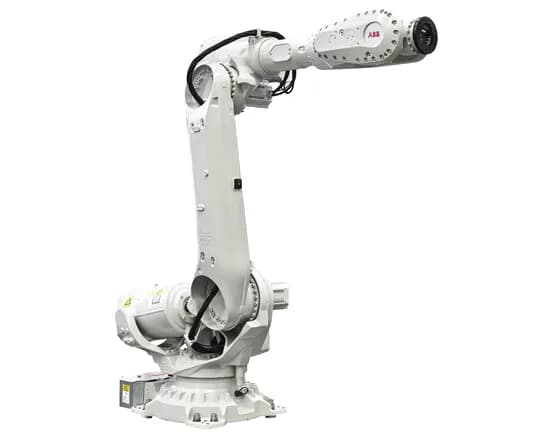
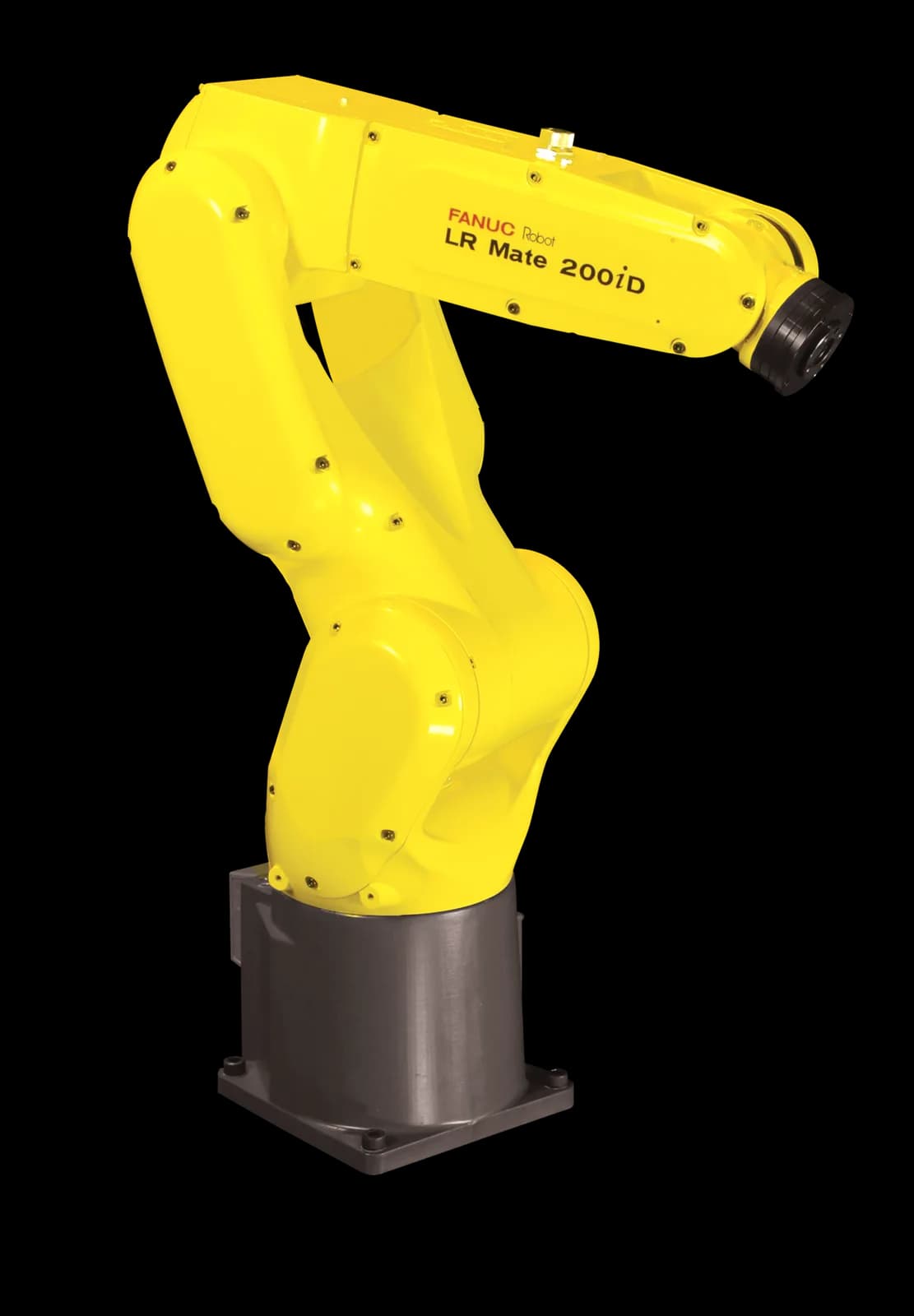
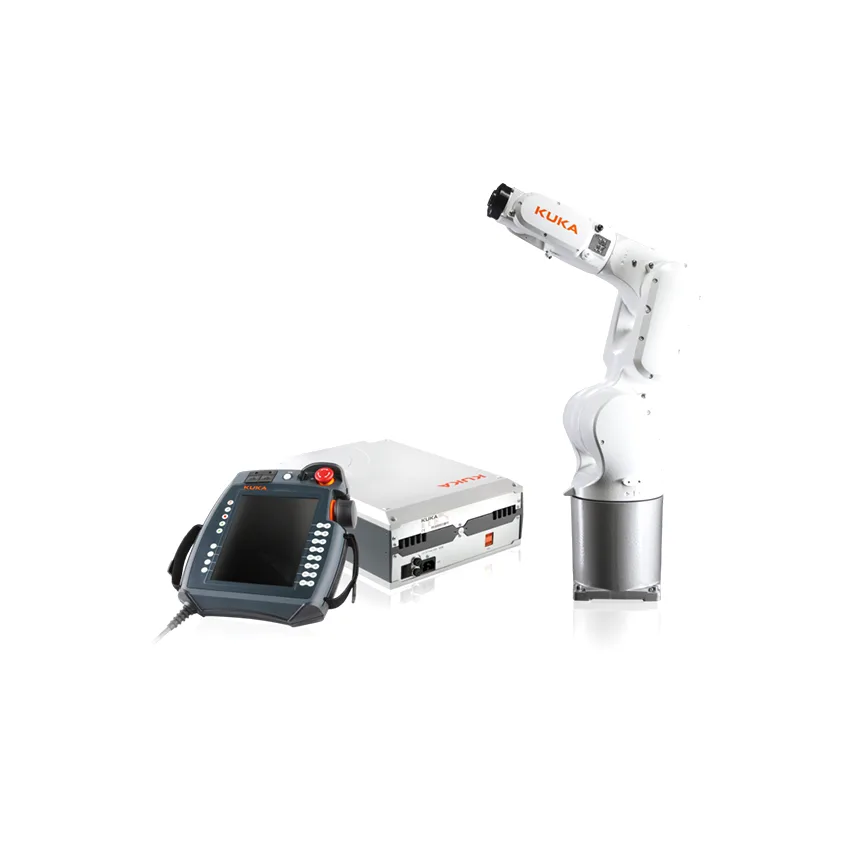
Cell configuration: an arm with an 18 kg gripper, infeed conveyor, fencing, PLC sync with the line. Turnkey budget — $42,000 including commissioning and training. The cell covers the evening and night shifts; the day shift stays human — that is where the frequent changeovers live.
Operator rate $850/mo with taxes. The 0.8 coefficient is honest: changeovers and supervision stay with people.
One line missing from the table actually closed the deal: the third shift stopped depending on hiring. The plant's HR was spending more on filling night positions than a quarter of the cell's service costs.
The robot does not replace people. It replaces the night.
Part 02
Anatomy of the cell: what $42,000 buys
A “turnkey cell” is six budget lines, and the arm is only half the money. The other half is what turns a robot into a working station: infeed, safety, synchronisation and the people who commission it all. Here is this project's budget, line by line.
| Component | Amount | Comment |
|---|---|---|
| Arm with controller | $19,500 | reach sized for a 1.8 m pallet height |
| Case gripper | $3,800 | vacuum, with replaceable cups |
| Infeed conveyor | $4,200 | 6-case accumulator |
| Fencing and safety circuit | $5,100 | gates, light curtains, safety relays |
| PLC, panel, line integration | $4,600 | + inventory data exchange |
| Installation, commissioning, training | $4,800 | two weeks on site |
2026 project prices; a different pallet height or line rate will move the budget.
Where you can save: an arm from China's secondary market takes up to $7,000 off the budget — provided it is inspected and the reducers replaced before installation. Where you cannot: the safety circuit and fencing. A station without certified safety is not a saving — it is a deferred shutdown of the whole line after the first incident with an inspection.
Part 03
Where the crew still wins
Three honest cases against the cell. Frequent changeovers: if the SKU changes every half hour, tooling eats the savings — look at a cobot or keep the people. Unstable cases: crumpled packaging needs machine vision, which is a different budget. Peak flexibility: a crew can be moved to another station; a cell cannot.
Part 04
What is critical at rollout
A steady infeed — the cell hates “empty, then avalanche”. Fencing and the safety circuit are not options but the project's licence to exist. And PLC sync with the line: a cell that cannot stop the conveyor will one day build a pallet out of thin air.
Part 05
Integration with the line and the inventory system
The minimal signal exchange with the line is four wires: “case incoming” from the line to the cell, “accumulator full — slow down” from the cell to the line, an emergency stop in both directions, and “pallet ready” to call the forklift. This is PLC level (programmable logic controller — the station's industrial brain), no servers involved, and it is mandatory: a cell running blind falls apart at the first rhythm glitch.
The next level is inventory. When the cell closes a pallet, it knows its contents better than any storekeeper — counting cases is its job. A WMS or ERP link turns that into an automatic pallet label and a warehouse receipt with no manual recount. In our case, the inventory integration paid for itself through a single effect: the “lost” pallets — booked as in-production while physically standing in the warehouse — disappeared.
Part 06
From down payment to the first pallet
- Survey: station measurements, video of the line flow, case profile — one week.
- Cell design: layout, cycle diagram, line-by-line budget — one week to approve.
- Production and bench assembly: arm, conveyor and fencing built and run at the integrator's — 6–8 weeks.
- Bench FAT: a run on your cases, with your stacking pattern — one or two days, protocol with video.
- Installation and commissioning on site: mechanics over a weekend, line synchronisation — a week.
- Shift training and supervised operation: two weeks with an engineer on call, then scheduled service.
After launch the cell lives on scheduled service: maintenance every six months — reducers, cable chains, gripper calibration — and a spare-parts kit on site: suction cups, fuses, pneumatic fittings. That is enough for a regular shift mechanic to keep the station running between engineer visits. One more line: keep the support phone number on the wall by the panel — half of all first-year “emergencies” are solved in a ten-minute call.
Put your own line into this calculation
The Warehouse package calculator has a palletizing scenario — same formulas, your numbers. Attach the result to your request in one click.

Want to map this onto your site?
The two-minute audit suggests the right format — catalog, package or custom project. Or write to us directly: the conversation starts with your numbers, not a slide deck.