Warehouse · AGVSeegridUSA
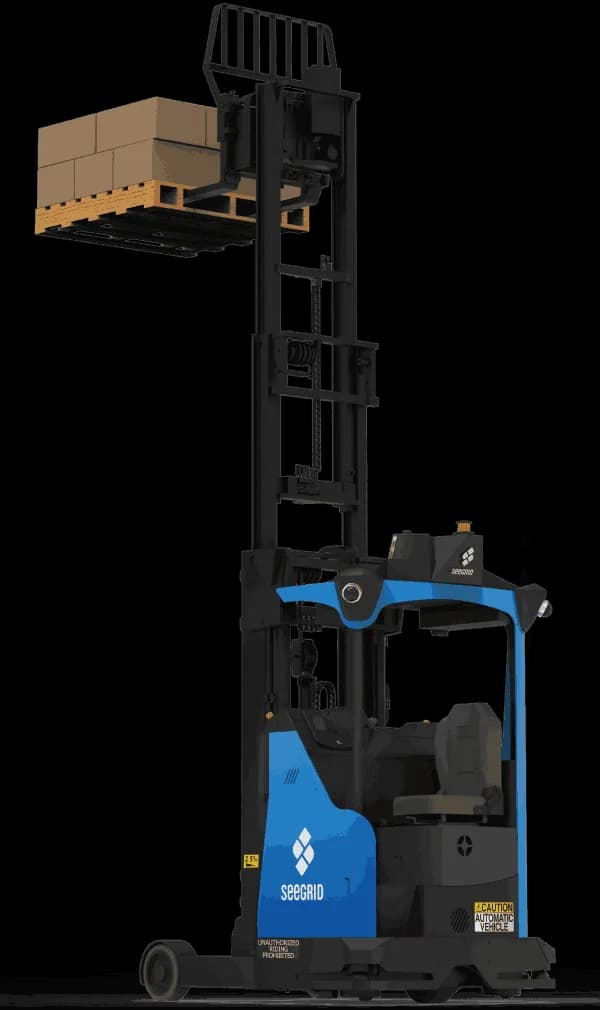
Lift CR1
An autonomous lift truck from a US AMR maker focused on in-plant logistics. It handles pallets up to 1.8 t and places them at heights up to 4.5 m, blending AMR agility with AGV predictability (Sliding Scale Autonomy). Built for warehouses that need driverless vertical pallet handling.
Specifications
- Payload
- 4,000 lbs (1,814 kg)
- Lift height
- up to 180 in (4.57 m)
- Max speed
- 5.0 mph (8 km/h)
- Sensing
- 5 LiDAR sensors (2D and 3D)
Request catalog accessPrices — on request
Applications
- Pallet transport between warehouse zones
- Stacking and putaway to racking
- Material delivery to production lines
- Linking receiving with storage areas
Alternatives
Similar models in our catalog
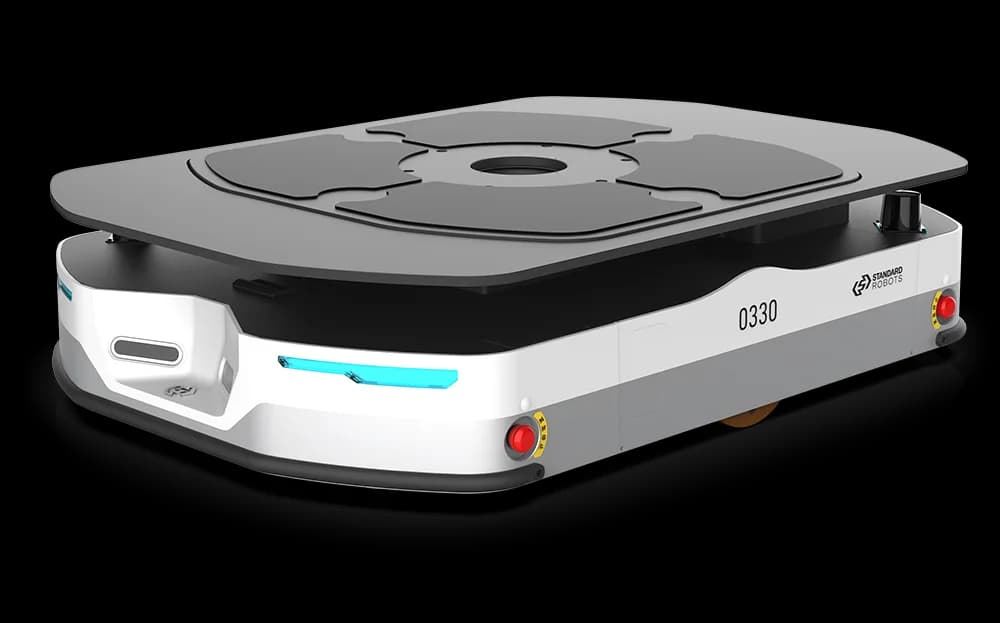 Standard RobotsOasis 1200A compact under-shelf AMR with a built-in lifting deck: it drives beneath a rack or cart, lifts loads up to 1.2 t and moves them using SLAM navigation — no floor tape or markers required. The 266 mm low profile fits under standard shelving. A workhorse of intralogistics from Shenzhen-based Standard Robots.Open →
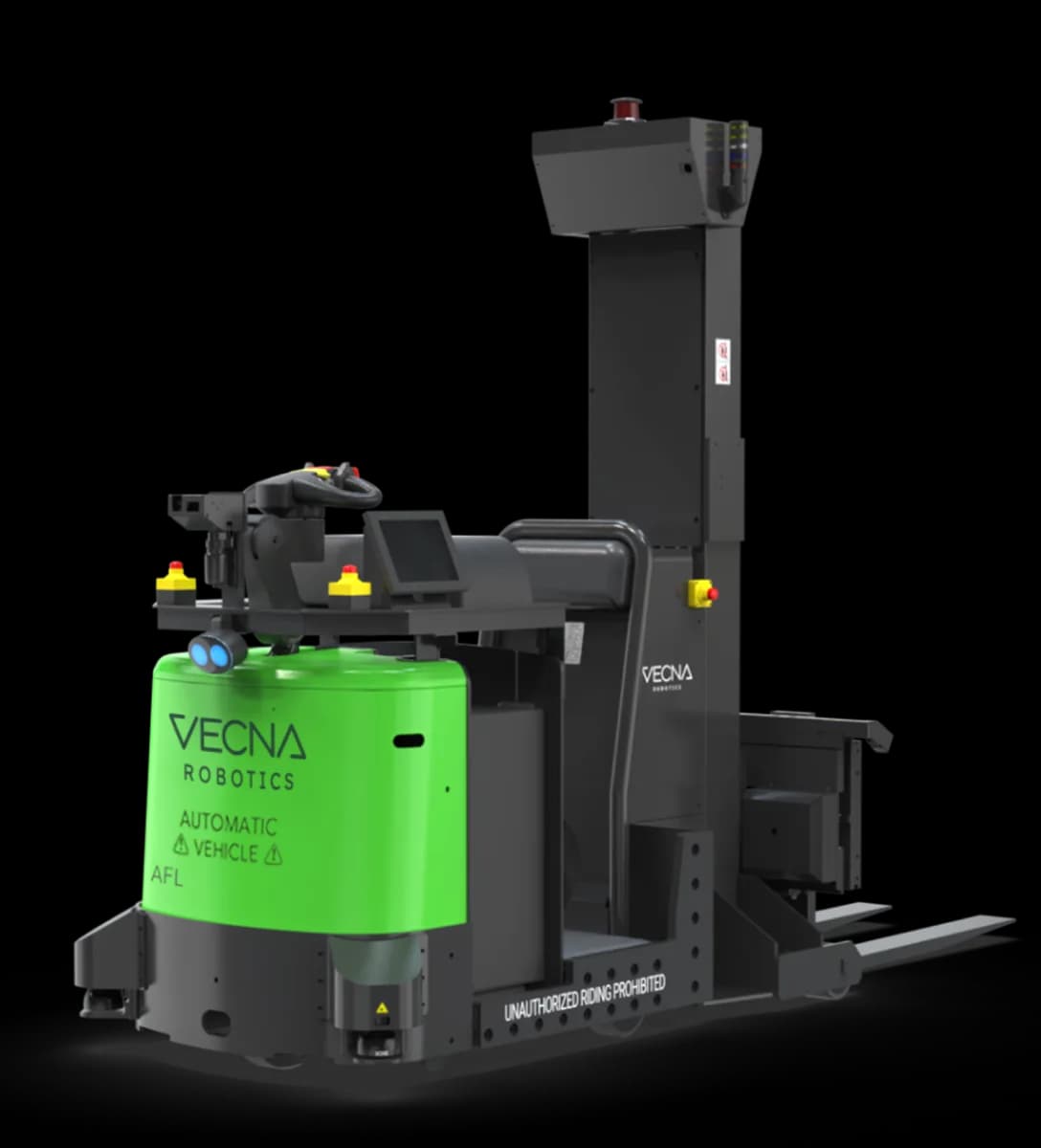 Vecna RoboticsAFL Autonomous ForkliftA driverless forklift for moving and placing pallets. It detects pallet type and orientation before engaging, scans license plate barcodes and pushes real-time updates to the warehouse management system. Third-party certified to ANSI B56.5 and RIA 15.08 safety standards.Open →
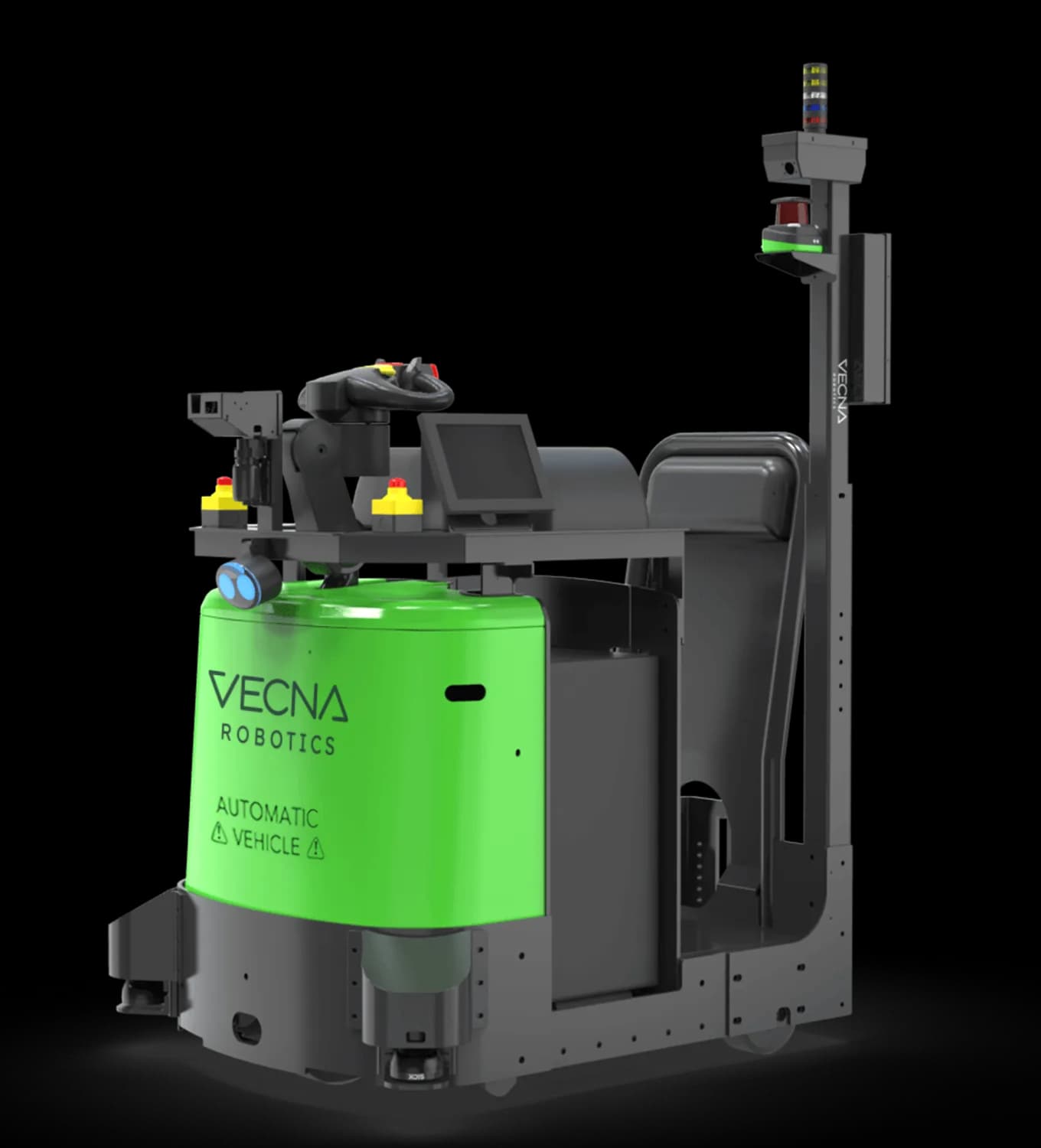 Vecna RoboticsATG Autonomous TuggerAn autonomous tugger that hauls cart trains with a combined weight of up to 4.5 t. A fast answer to high-volume flows between buildings and lines: up to 6 mph and 24/7 duty with opportunistic charging. Its fork-free design is safer around people — well suited to assembly lines and sortation hubs.Open →
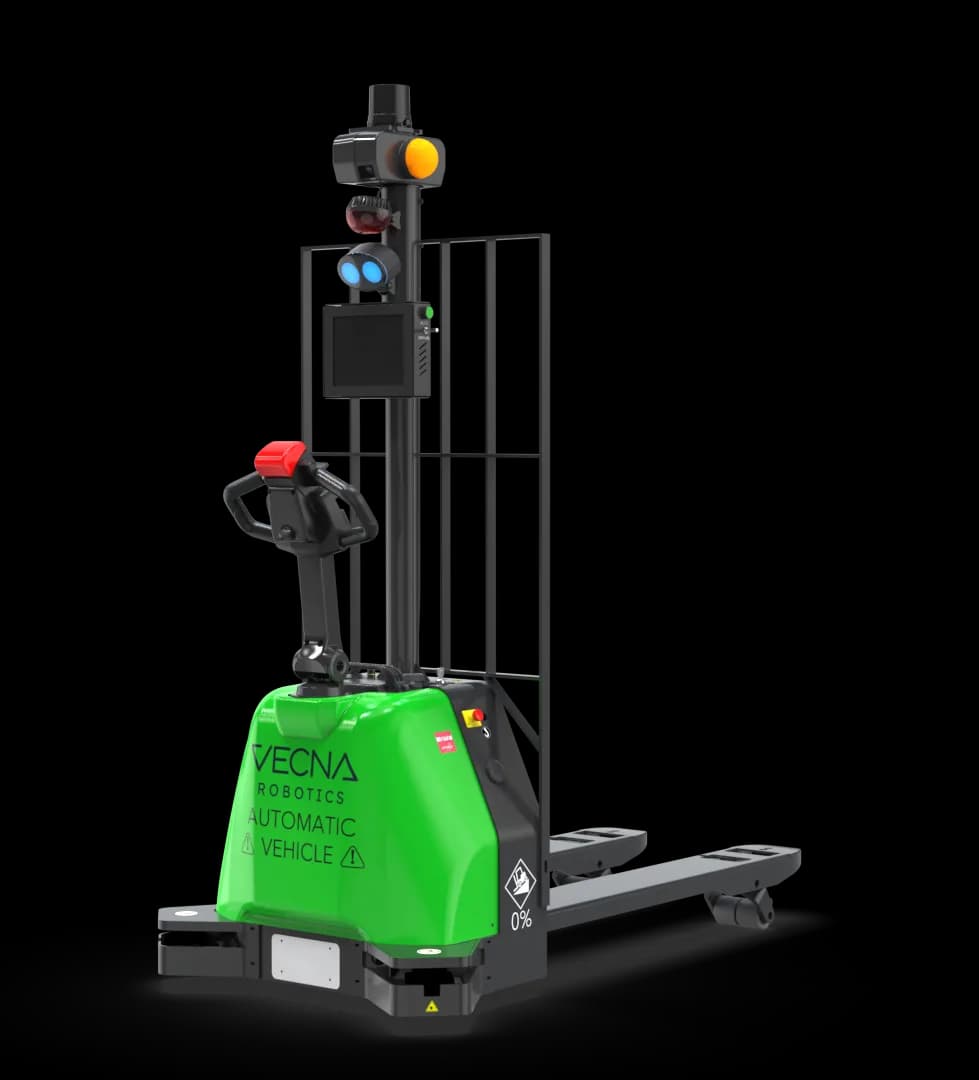 Vecna RoboticsCPJ Co-bot Pallet JackA collaborative self-driving pallet jack developed by Vecna Robotics together with forklift maker Big Joe. It switches between autonomous runs and manual control via an onboard tablet: the operator loads a pallet, and the robot handles the trip. Designed for short, repetitive in-warehouse moves.Open →