How cleaning robots ate the Gulf's office-cleaning market
Scrubber robots in the Gulf: what broke the manual night-cleaning market in Dubai offices — and why the CIS will walk the same path faster than it seems.
Up front: the machines did not get radically better in three years — they got radically easier to reason about. Property managers learned to budget them, insure them and write them into regulations. The tipping point happened in procurement, not in technology.
Part 01
Four reasons for the shift
Night-hour economics
A machine covers up to 2,200 m² per hour and earns no night premium. From a couple of floors up, the maths works without stretching.
Proof instead of promise
Every night produces a coverage map with tracks and gaps. A tenant dispute closes with a data export, not the supervisor's word.
Labor shortage
Night cleaning shifts are a permanent hiring hole. The robot does not solve the people problem entirely, but removes its most painful part.
Class A obliges
Robotic cleaning became a building-class marker, like high-speed lifts. ESG reports and international tenants read it instantly.
Property managers stopped buying cleaning. They buy proof of cleaning.The market's main shift · 2023→2026
Part 02
What this means for the CIS
The Gulf-to-CIS lag in commercial real estate has historically been 18–24 months. Office and mall chains will move first — their contractor-control pain is multiplied by the number of sites — followed by healthcare, where a disinfection route is a matter of protocol, not aesthetics. The practical takeaway: tenders will demand coverage tracks sooner than you can run a pilot. It is cheaper to be in the first wave with your own data than in the second with someone else's terms.
Part 03
How to size the machine for the building
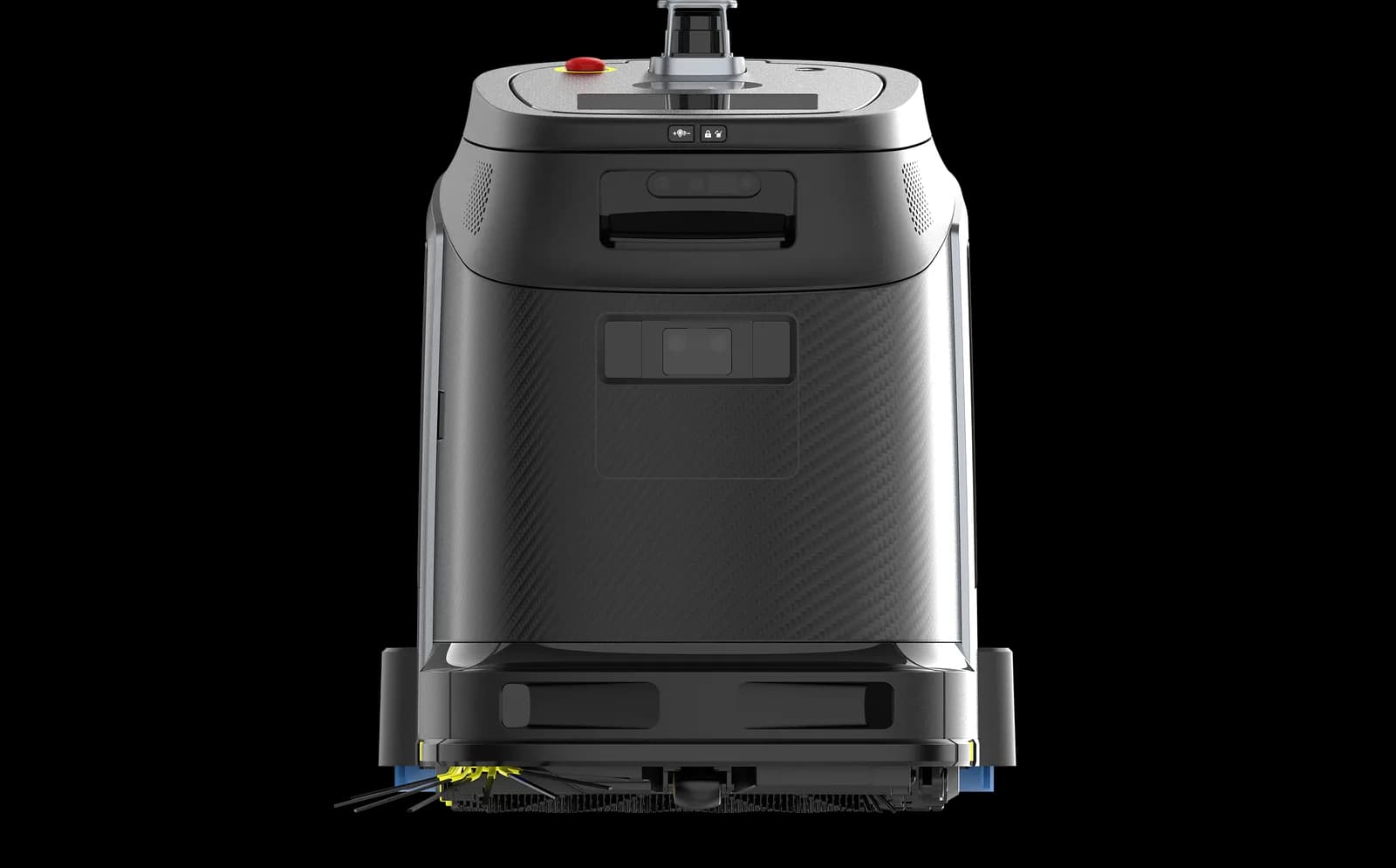
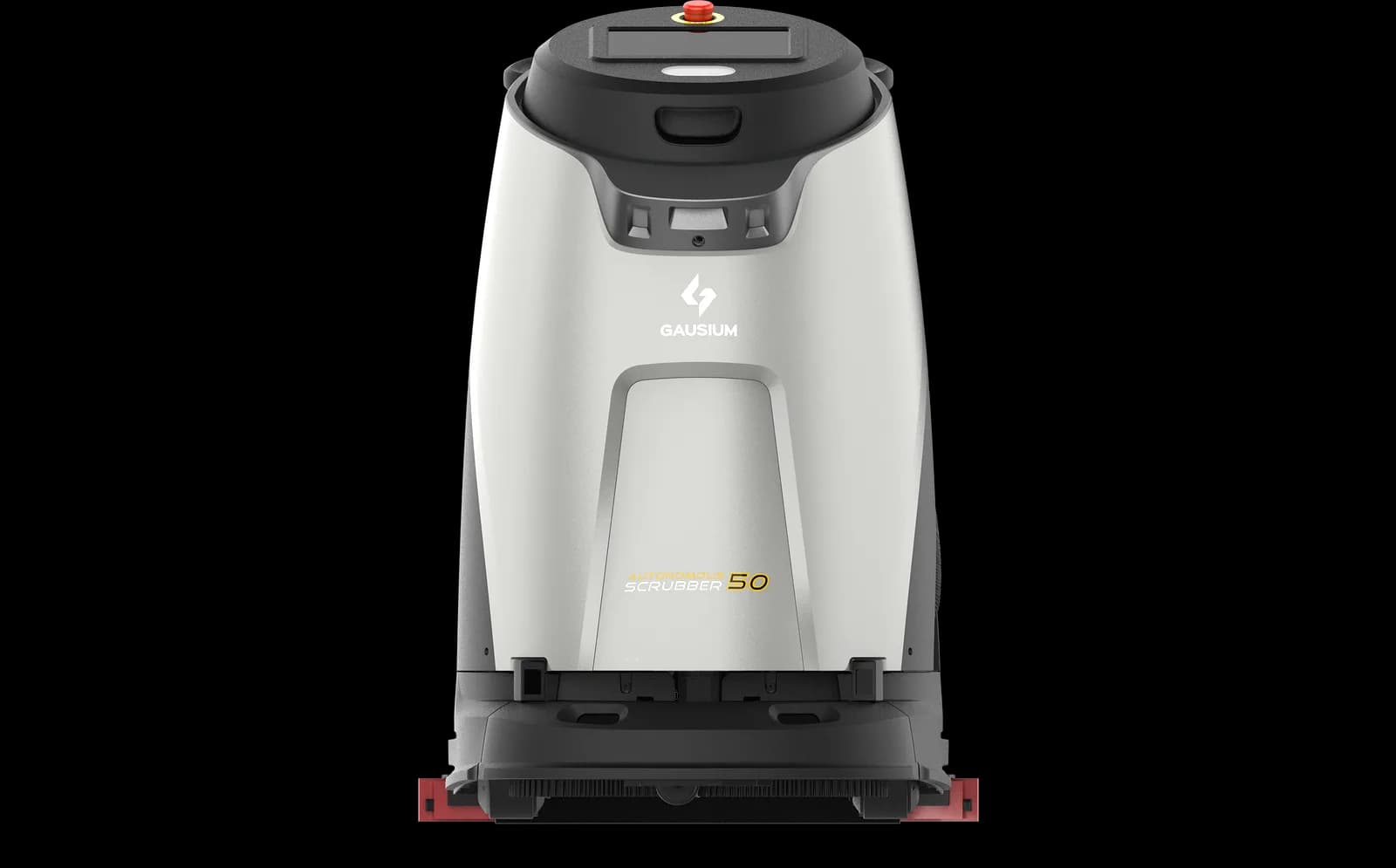
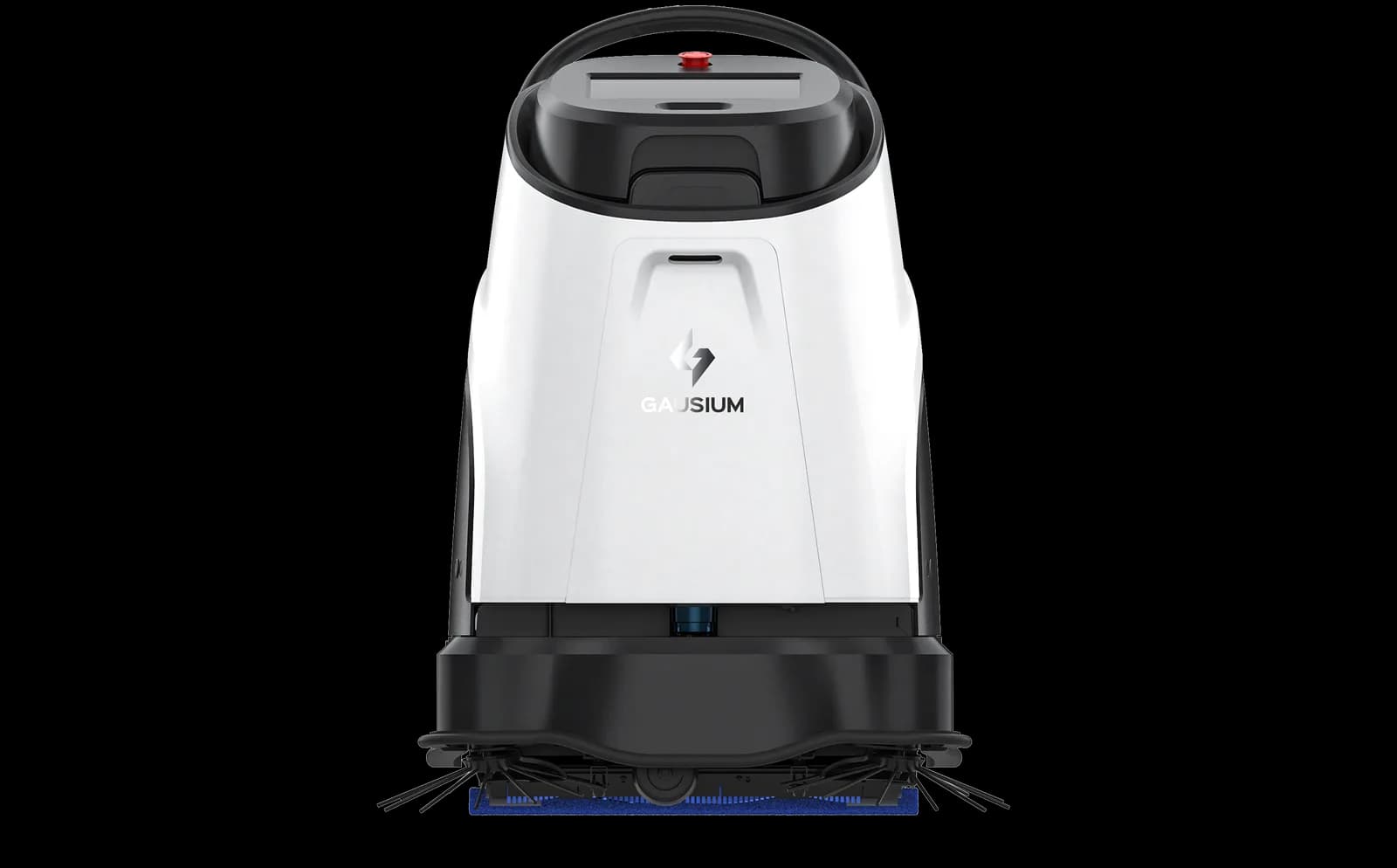
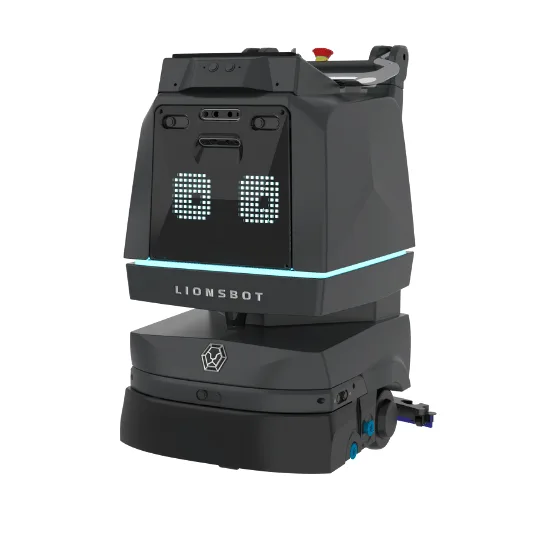
The scrubber-robot market splits into three classes by cleaning width — and most procurement mistakes happen at the borders between them. A machine bought “to grow into” gets stuck in corridors; a machine bought “to budget” is still scrubbing the atrium at noon. The starting point is not the building's floor area but the geometry of the narrowest regular route: door openings, lifts, the turns by the restrooms.
| Parameter | Compact | Mid-size | Wide-deck |
|---|---|---|---|
| Cleaning width | 40–55 cm | 65–75 cm | 85–110 cm |
| Productivity | up to 900 m²/h | 1,200–1,800 m²/h | 2,000–3,000 m²/h |
| Minimum aisle | from 80 cm | from 110 cm | from 150 cm |
| Typical site | office floors, clinics | office towers, retail, stations | malls, warehouses, parking |
| Price guideline | $8–15k | $18–30k | $30–55k |
Turnkey prices with dock and launch, 2026 guidance. The exact budget depends on configuration and logistics.
The second axis is water infrastructure. A machine with manual refill needs a person twice a shift — and that breaks the economics of night cleaning. A dock with auto-fill and drain costs about a tenth of the machine and returns the core promise: a night with no staff. If the building has no utility room with water within the route's radius, put its fit-out into the project budget rather than “sort it out later”.
Part 04
Service and consumables: where the real cost lives
Scrubber robots are the one service-robotics category where consumables rival the service plan in cost. Brushes, squeegees and filters wear by square metres, not by time — and on abrasive tile the lifespan halves against the datasheet. An honest cost-of-ownership calculation looks like this:
- Brushes — replaced every 300–500 machine-hours; on a night schedule that is every 3–4 months, $60–120 a set.
- Squeegees — 200–400 hours of life, cheaper than brushes, but their wear is what leaves streaks — watch the quality track.
- Filters and hoses — every six months; a clogged filter is the top reason a robot “washes with dirty water”.
- Service plan — quarterly maintenance, remote monitoring, parts from the regional stock: $80–180/mo depending on machine class.
All in, owning a mid-class machine costs $150–250 a month on top of depreciation. For comparison: one night cleaner's wage with taxes runs $700–900 in CIS million-cities and from $1,100 in the Gulf. The maths works from a single floor up — but only if the machine actually runs every night, which is why coverage control matters more than a discount on the hardware.
Common first-purchase mistakes
- A machine “to grow into” — a wide-deck model for a building with 90 cm aisles. Half the route stays manual and the economics never close.
- Consumables missing from the budget — brushes and squeegees surface a quarter later as an “unforeseen” $100–150 a month.
- Daytime cleaning — a machine among people loses up to 40% productivity to detours. Its shift is the night.
- No owner on site — the robot needs one trained duty person: check the tank, pull the track, restart the route. Without one, any glitch waits until morning.
Part 05
A 30-day pilot: how to verify before buying
We do not recommend buying a cleaning fleet without a pilot: thirty nights on your own site answer questions no datasheet will. A proper pilot looks like this:
- Week 1 — mapping, route setup, training the duty officer. The machine runs supervised.
- Weeks 2–3 — autonomous nights. Every morning, a coverage map: tracks, gaps, time, water consumption.
- Week 4 — stress test: rearranged furniture, a wet zone at the entrance, Wi-Fi off for an hour.
- Finish — match the tracks against the cleaning regulation and price a square metre against the current contractor.
The Clean Business Center package is that first wave
Floor routes, a square-metre report for every night, and an SLA. The calculator works out the economics for your floor area in a minute.
Want to map this onto your site?
The two-minute audit suggests the right format — catalog, package or custom project. Or write to us directly: the conversation starts with your numbers, not a slide deck.